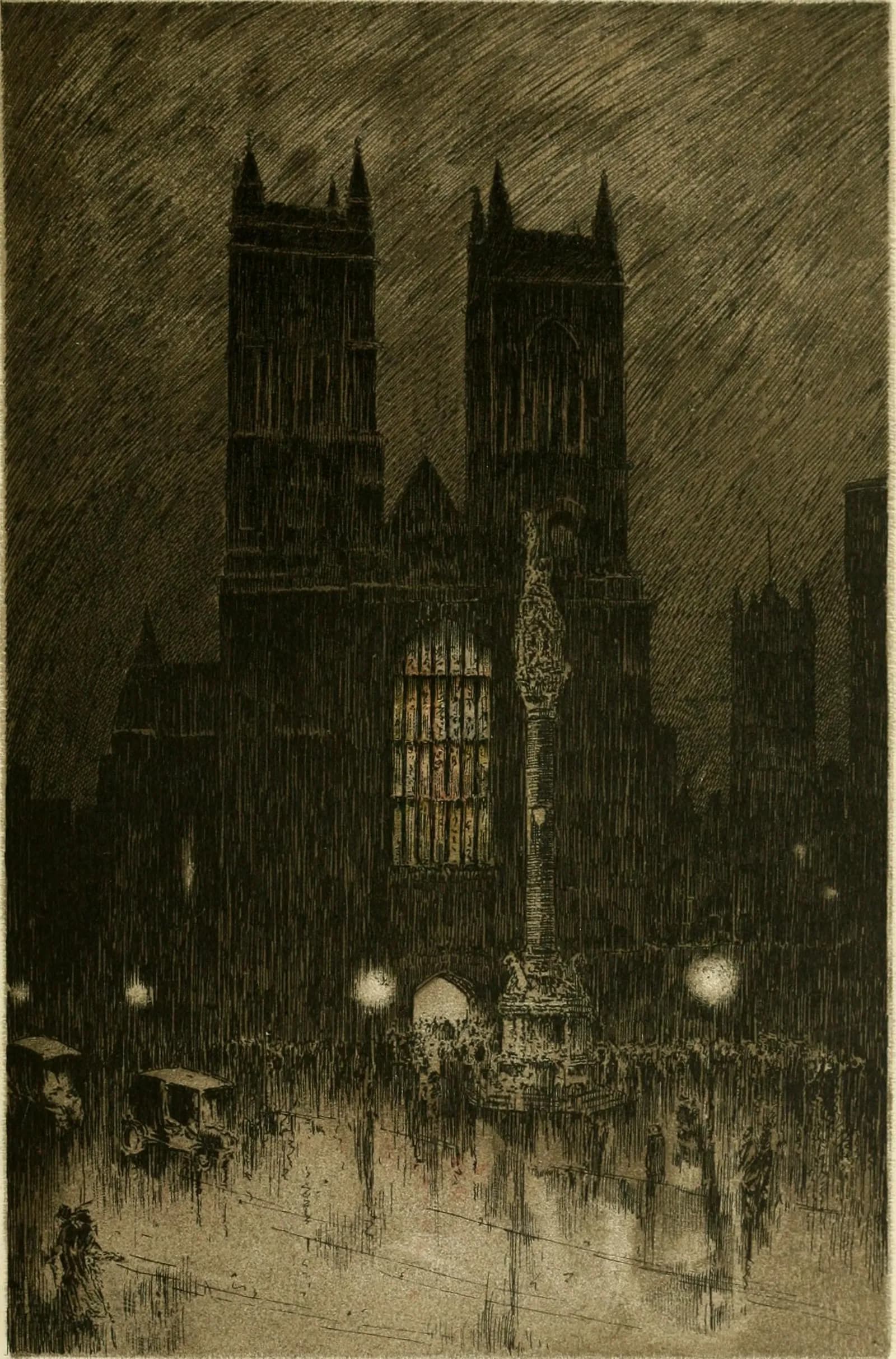
Westminster Abbey's ancient connection to the Thames and its fishermen stretches back more than a millennium. The tradition, rooted in legend and sustained by one of London's oldest livery companies, continues to this day.
The Vision on Thorney Island
The abbey stands on what was once Thorney Island, a patch of land formed by rivulets of the River Tyburn as they entered the Thames. According to medieval legend, a young fisherman named Edric was casting his nets near this spot when he experienced a vision of Saint Peter, the apostle and patron saint of fishermen.
The story, recorded in a 13th-century manuscript, recounts how Saint Peter appeared to Edric and revealed himself as "Keeper of the Keys of Heaven." The apostle instructed the fisherman to tell Mellitus, the Bishop of London, that he had already consecrated the church of Saint Peter at Westminster. As a sign of divine favour, Edric was promised a plentiful catch of salmon, provided he observed two conditions: never to fish on Sundays, and to pay a tithe of his catch to the abbey.
The following day, when Mellitus arrived to perform the consecration himself, Edric presented him with salmon and recounted his vision. Upon entering the church, the bishop reportedly found evidence of the consecration already performed: symbolic letters upon the pavement, anointed walls, and the remains of candles.
From Legend to Tithe
Whether the vision occurred as described or served as pious origin myth, the practical consequence was real enough. Until the end of the 14th century, Thames fishermen were obliged to pay a tithe of their catch to Westminster Abbey. The place, once known as Thorney Island for its thorny thickets, became the West Monastery, a site of royal patronage and religious significance.
The connection to fishing runs deeper than this single legend. The abbey's full title is the Collegiate Church of Saint Peter at Westminster. Saint Peter, a fisherman by trade before becoming an apostle, provides the spiritual link between the church and those who made their living on the Thames.
Medieval religious observance reinforced this bond. The church forbade meat consumption on numerous days throughout the year, making fish a dietary staple. Control of the London fish trade became both profitable and politically significant.
The Fishmongers' Company and the Living Tradition
The Worshipful Company of Fishmongers received its first Royal Charter from Edward I in 1272, formalising its authority over the City's fish trade. The Company ranks fourth among the livery companies of the City of London, a position reflecting the historical importance of fish in the medieval economy.
The Company maintains its connection to the abbey through an annual ceremony. Each year, the Fishmongers present Westminster Abbey with a salmon, a gesture that acknowledges the medieval legend and the centuries-old relationship between the church and the fishing trade.
This gift is not mere ceremonial nostalgia. It represents an unbroken chain of tradition stretching back to the abbey's earliest days, when the Thames itself provided both the physical setting and the economic basis for religious life at Westminster.
The 1,400-Year Timeline
The "1,400-year" claim rests on medieval tradition rather than documentary certainty. Later legend attributes the foundation of a monastery dedicated to Saint Peter at this site to Sæberht of Essex, a 7th-century ruler who died around 616 AD. If such a foundation did occur, it would place the origins of religious observance at Westminster roughly 1,410 years ago.
What is more securely established is the Benedictine presence. Around 959, Dunstan, Archbishop of Canterbury, and King Edgar installed a community of Benedictine monks on Thorney Island. This date marks the certain beginnings of continuous religious life at the site.
A Local Legacy on the Thames
For Westminster residents, the salmon tradition offers a reminder of how deeply the area's identity is tied to the Thames. Before the embankments and the Victoria Tower Gardens, before the modern shoreline took shape, Thorney Island stood in the river, accessible by boat and surrounded by fishing grounds. The annual salmon gift from the Fishmongers' Company preserves this connection in the present day. It is a tangible link between the working fishermen of medieval London and the royal abbey that has witnessed coronations, royal weddings, and state funerals for centuries.
The ceremony also highlights the continuing role of the livery companies in London's civic life. Though their regulatory powers have diminished, companies such as the Fishmongers maintain traditions that would otherwise fade into historical footnotes.